
STATEMENT
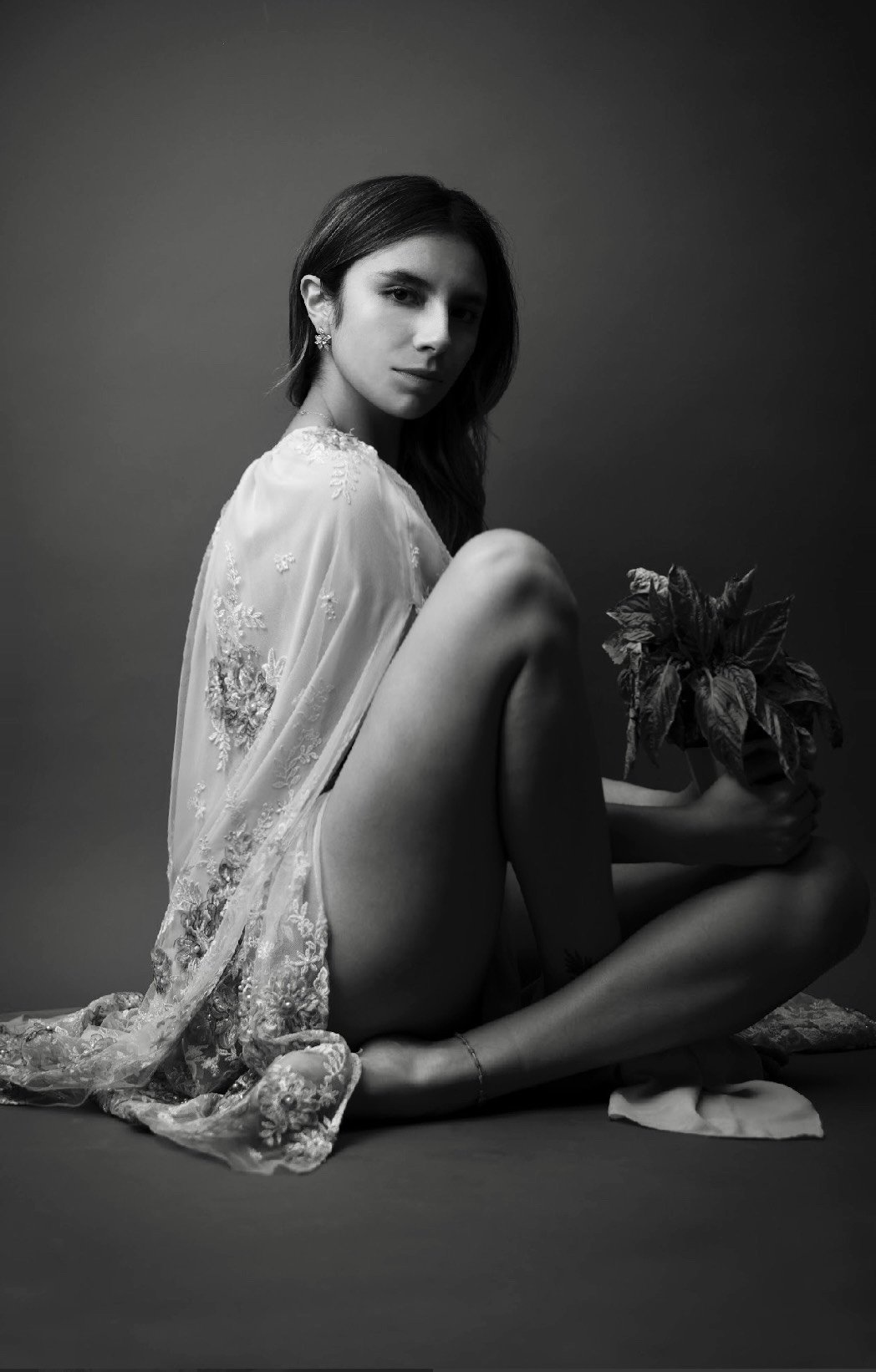
Photography credits: Federico Bottia
My work explores the relationship we have with nature. Through embroidery on paper and colored pencil, and drawing on psychology, the history of the garden and the impact of colonization in the Americas, I approach language and emotion as paths toward awareness of that bond.
The garden is a living organism and, at the same time, one of the oldest forms of control. For centuries, the cultivated landscape has served to impose order on the land: from the geometries of Versailles to the colonial gardens of the Americas, sustained by forced labor. Yet living things refuse to be fixed. They grow, adapt and change.
In my work, nature is an emotional vehicle that reflects our own capacity for growth and transformation. I work slowly and by hand, and each surface holds the time invested in it, like a garden tended season after season. The flowers are allowed to be admired and then dissolve into abstraction: what begins as a plant becomes structure, repetition, a field of marks.
I am interested in reinterpreting the work of Luis Barragán and other Latin American architects and landscape designers, such as Roberto Burle Marx, who set out to understand the Latin American landscape, colorful and untamed, rather than subdue it. Instead of imposing a foreign geometry, they sought structures of order that responded to the needs of a wilder flora and fit with it. My work grows out of that same search: an order that accompanies rather than domesticates.
Gardens are the only living organisms that need external approval in order to function.
ESPAÑOL
Mi obra explora la relación que tenemos con la naturaleza. A través del bordado sobre papel y el lápiz de color, y desde la psicología, la historia del jardín y el impacto de la colonización en las Américas, entiendo el lenguaje y la emoción como caminos para tomar conciencia de ese vínculo.
El jardín es un organismo vivo y, al mismo tiempo, una de las formas más antiguas de control. Durante siglos, el paisaje cultivado ha servido para imponer orden sobre la tierra: de las geometrías de Versalles a los jardines coloniales de las Américas, sostenidos por el trabajo forzado. Sin embargo, lo vivo no se deja fijar. Crece, se adapta y cambia.
En mi obra, la naturaleza es un vehículo emocional que refleja nuestra propia capacidad de crecimiento y transformación. Trabajo despacio y a mano, y cada superficie guarda el tiempo invertido en ella, como un jardín que se cuida temporada tras temporada. Las flores se dejan admirar y luego se disuelven en la abstracción: lo que empieza como una planta se vuelve estructura, repetición, un campo de marcas.
Me interesa reinterpretar los ejercicios de Luis Barragán y de otros arquitectos y paisajistas latinoamericanos, como Roberto Burle Marx, que se propusieron entender el paisaje latino, colorido y agreste, en lugar de someterlo. En lugar de imponer una geometría ajena, buscaron estructuras de orden que respondieran a las necesidades de una flora más salvaje y que encajaran con ella. Mi obra parte de esa misma búsqueda: un orden que no domestica, sino que acompaña.
Los jardines son los únicos organismos vivos que necesitan de la aprobación externa para funcionar.